

Tuesday, November 24
Shadow
Gold, Commodities, and Protection: How to Shield Your Wealth Against Inflation and Geopolitical Uncertainty

Gold, Commodities, and Protection: How to Shield Your Wealth Against Inflation and Geopolitical Uncertainty

Finance
Inflation accelerates. Energy prices jump. A geopolitical conflict disrupts supply chains. Bond yields rise. Stock markets become volatile. Suddenly, the assets that looked perfectly balanced a few months earlier may all be responding to the same economic shock. That is why experienced investors increasingly think about portfolio resilience before the next shock arrives. Gold and commodities can play a role in that process. They don't generate the same type of cash flow as productive businesses or bonds, and they can be highly volatile. But their prices are driven by different forces, including inflation, supply constraints, currency movements, interest rates, inventories, and geopolitical developments. That difference can matter. The International Monetary Fund has noted t...
Real Passive Income in 2026: Strategies That Work When You Already Have Investing Experience

Real Passive Income in 2026: Strategies That Work When You Already Have Investing Experience

Finance
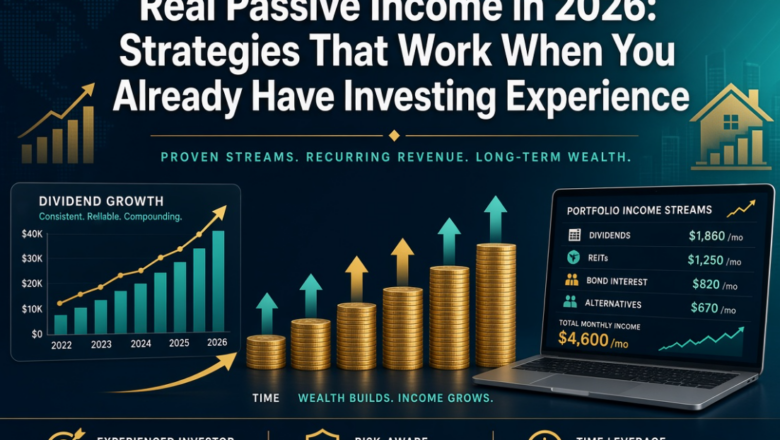
Open social media and you'll find people promising that you can build a portfolio, automate everything, and eventually collect money without doing any work. The reality is considerably less glamorous—and much more useful. For experienced investors, passive income isn't about finding a magical asset that produces effortless cash. It's about building a portfolio where capital can generate income without requiring you to constantly trade, manage customers, chase opportunities, or turn every investment into a second job. In 2026, investors have more ways to pursue that goal than ever. Traditional dividends and bonds remain important, while REITs, money-market instruments, Treasury securities, and diversified funds can play different roles depending on an investor's objectives. The...
Higher Interest Rates: What Changes in Your Portfolio and How to Adapt Without Sacrificing Returns

Higher Interest Rates: What Changes in Your Portfolio and How to Adapt Without Sacrificing Returns

Finance
When interest rates rise, investing can suddenly feel like a different game. Cash starts paying something meaningful. Bonds become more interesting, but existing bond prices can fall. Growth stocks may face greater pressure as investors reassess future earnings. Real estate becomes more expensive to finance. Even companies that have nothing to do with banking can feel the effects through borrowing costs, consumer demand, and valuation changes. The natural reaction is to ask: Should I change my portfolio? The answer isn't necessarily to become more conservative or move everything into cash. Higher rates change the opportunity set, but they don't eliminate the need for diversification, growth, or long-term thinking. Instead, a higher-rate environment can be an opportunity to ...
How to Use AI Tools to Optimize Your Investment Strategy (Without Losing Control)

How to Use AI Tools to Optimize Your Investment Strategy (Without Losing Control)

Finance
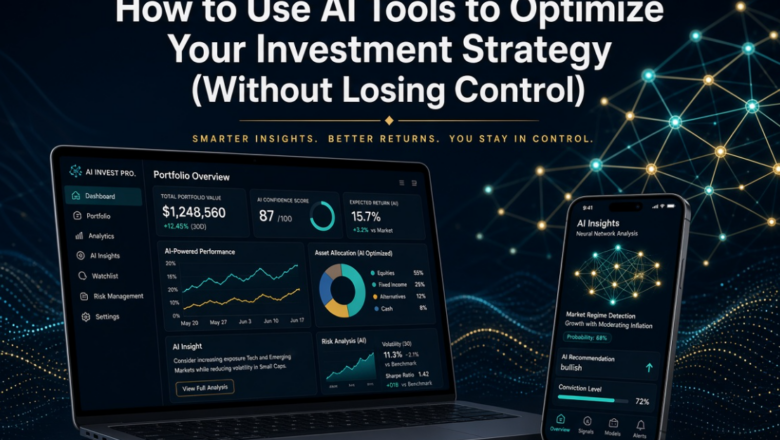
Artificial intelligence is changing the way investors research companies, analyze portfolios and process financial information. In 2026, you no longer need a quantitative research team to use AI for tasks that once required hours of manual work. That accessibility is useful—but it also creates a new problem. When an AI tool produces a polished explanation, identifies a pattern in a stock chart or summarizes an earnings report in seconds, it can be tempting to assume the output is reliable. That's where things can go wrong. The most effective way to use AI in investing isn't to hand over your portfolio and let an algorithm make every decision. It's to use AI as an analytical assistant while keeping the investment thesis, risk limits and final decisions under your control. That d...
REITs and Alternative Real Estate: Better Options Than Traditional Property in a High-Rate Environment

REITs and Alternative Real Estate: Better Options Than Traditional Property in a High-Rate Environment

Finance
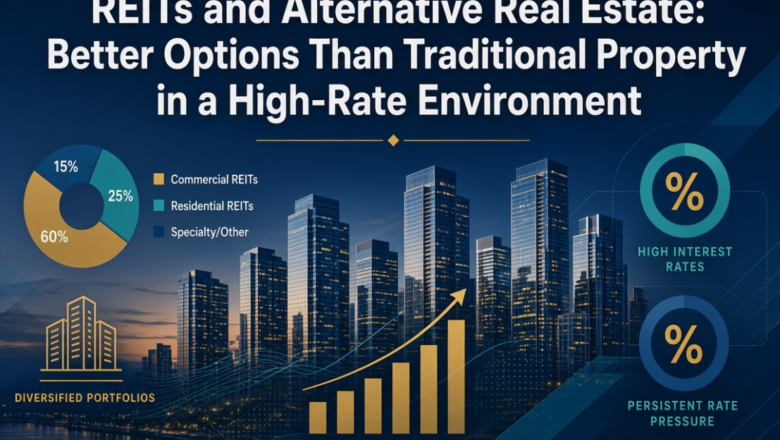
REITs and Alternative Real Estate: Better Options Than Traditional Property in a High-Rate Environment For years, buying a rental property seemed like one of the most straightforward ways to build wealth through real estate. Buy an apartment, collect rent, let the property appreciate, and use leverage to potentially increase your returns. The problem is that the economics of that strategy can change dramatically when borrowing costs rise. Higher mortgage rates can reduce cash flow, increase refinancing costs, and make property valuations harder to justify. For experienced investors, that raises a more interesting question: do you really need to own physical property to benefit from real estate? REITs and alternative real estate assets offer another way to gain exposure to the s...
Tokenized Assets (RWAs): What They Are and How Experienced Investors Can Add Them to Their Portfolio

Tokenized Assets (RWAs): What They Are and How Experienced Investors Can Add Them to Their Portfolio

Finance
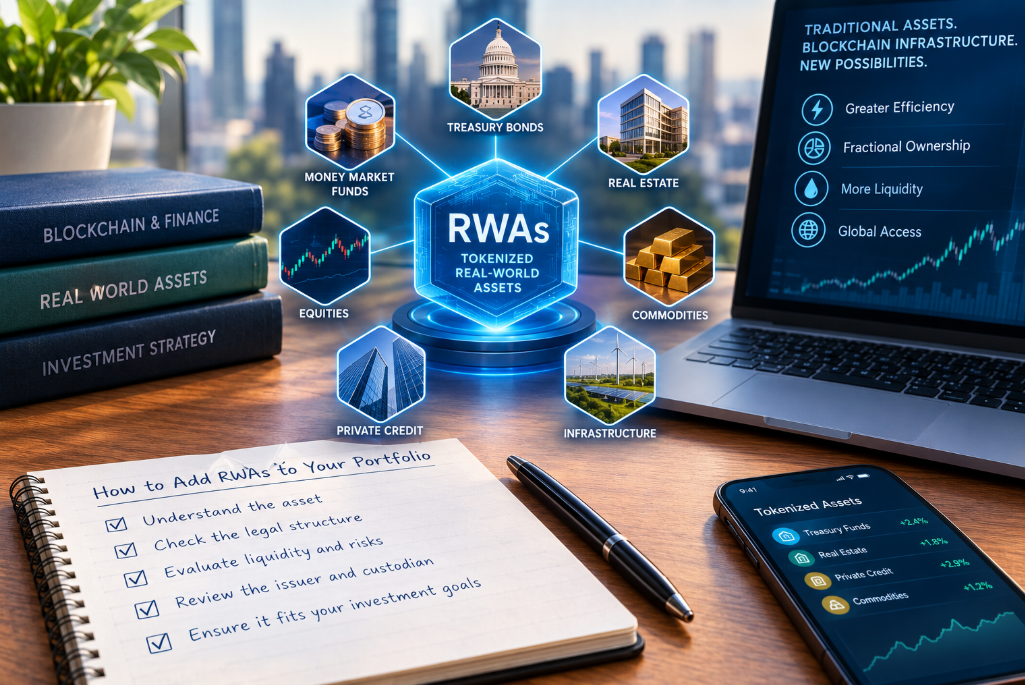
For years, blockchain investing was mostly associated with cryptocurrencies, speculative tokens, and decentralized finance. But a different part of the market is becoming increasingly important: tokenized real-world assets, or RWAs. The basic idea is surprisingly simple. A traditional asset—such as a Treasury bond, money market fund, real estate interest, private credit investment, or commodity—can be represented digitally on a blockchain. Instead of relying entirely on conventional financial infrastructure to record ownership and transfer assets, some of the process can happen on-chain. The market is still developing, and tokenization does not automatically make an investment better, safer, or more liquid. In fact, investors face new risks involving custody, smart contracts, regulat...
Diversify Beyond Big Tech: 5 Smart Ways to Rebalance Your Portfolio

Diversify Beyond Big Tech: 5 Smart Ways to Rebalance Your Portfolio

Finance
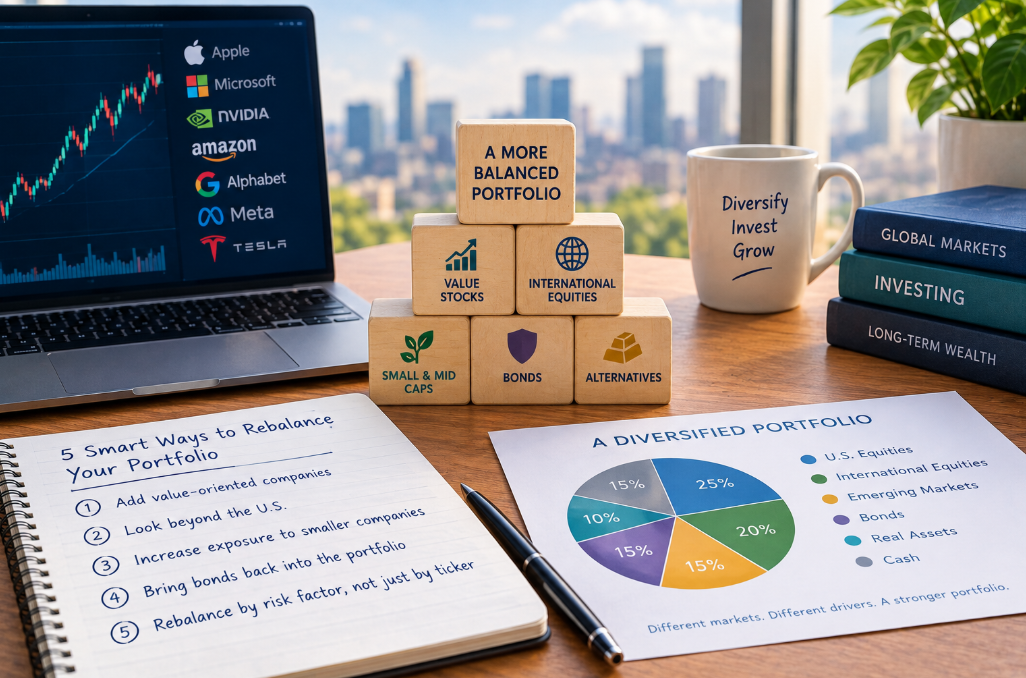
Big Tech has been one of the defining investment stories of the past decade. Companies such as Nvidia, Microsoft, Apple, Alphabet, Amazon, Meta and Tesla have become so large that their performance can meaningfully influence broad market indexes. That creates an interesting problem for investors in 2026. You can own a seemingly diversified S&P 500 fund and still have substantial exposure to the same technology, artificial intelligence and mega-cap growth themes. As of August 2026, the S&P 500's largest constituents included Nvidia, Apple, Microsoft, Amazon, Alphabet, Broadcom, Meta, Micron and Tesla. That doesn't mean Big Tech should automatically be sold. These companies can continue to generate strong earnings and benefit from long-term technology trends. The more use...
Emerging Markets: The Opportunity Experienced Investors Are Watching This Year

Emerging Markets: The Opportunity Experienced Investors Are Watching This Year

Finance
Emerging markets are back on the radar in 2026, but experienced investors are approaching them differently than they did during previous cycles. The story isn't simply "faster-growing economies equal higher returns." Emerging markets now cover a remarkably diverse group of countries, from semiconductor powerhouses in Asia to commodity exporters in Latin America and financial markets undergoing significant reforms. Their economic and market drivers can be very different. That diversity is precisely what makes the asset class interesting—and difficult. The World Bank expects growth across emerging market and developing economies to slow to 3.6% in 2026, reflecting geopolitical disruptions, higher energy prices, tighter financial conditions and weaker global trade. At the same time, ...
Fixed Income in 2026: Why Bonds Are Back in the Spotlight (And How to Choose Them)

Fixed Income in 2026: Why Bonds Are Back in the Spotlight (And How to Choose Them)

Finance
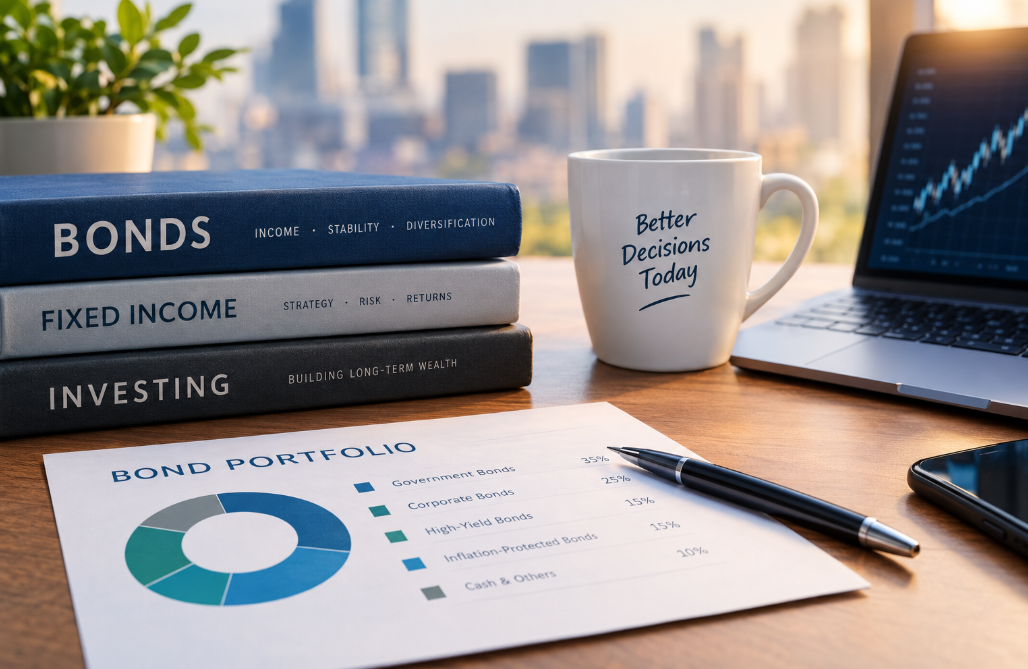
For years, bonds felt like the boring corner of an investment portfolio. Low yields made it difficult for many investors to get excited about fixed income, particularly when stocks and other risk assets were delivering stronger returns. That dynamic changed significantly when interest rates moved higher. Now, in 2026, fixed income deserves a closer look. Bonds can once again offer meaningful income, diversification and a different source of potential returns from equities. But that doesn't mean every bond is attractive, or that buying bonds is automatically the conservative choice. For investors who already understand the basics, the more interesting question is how to choose the right type of bond for a particular portfolio. Duration, credit quality, yield, inflation expectations...
How to Leverage AI in Your Portfolio Without Overexposure (2026 Strategies)

How to Leverage AI in Your Portfolio Without Overexposure (2026 Strategies)

Finance
Artificial intelligence has become much more than a technology story. By 2026, AI is influencing corporate spending, productivity expectations, semiconductor demand, software business models and, inevitably, investor portfolios. That creates an interesting problem for investors who already have some market experience: how do you participate in the AI opportunity without accidentally turning your portfolio into an AI portfolio? The distinction matters. You can own a broad-market ETF and already have meaningful exposure to companies benefiting from AI. Add a semiconductor ETF, a few large technology stocks and an AI-focused fund, and your actual exposure can become much larger than it appears on paper. The goal isn't necessarily to avoid AI. Instead, it is to understand where your e...

Share with